
المحاضرة الثانية:
The Concept of the Nervous System:
The nervous system is one of the major systems of the human body. It consists of a group of nervous organs. These organs are composed of nervous tissue, which consists mainly of neurons and supporting cells called glial cells.
The human nervous system is characterized by two main features:
First: Rapid responsiveness
The nervous system responds rapidly to changes occurring within the body and to stimuli from the external environment.
Second: Relative stability
The nervous system maintains a certain degree of internal stability and organization despite continuous changes in the internal and external environment.
مفهوم الجهاز العصبي: الجهاز العصبي Nervous system كأي في جسم الإنسان يتألف من مجموعة من أعضاء عصبية، الأعضاء العصبية تتكون من أنسجة عصبية، والأنسجة العصبية تتكون من خلايا عصبية.
ويتسم الجهاز العصبي للإنسان بصفتين أساسيتين هما:
أولا: سرعة تأثره بما يجري داخل الجسم وبما يجري في البيئة الخارجية.
ثانيا: استقراره النسبي مقارنة بأجهزة الجسم الأخرى.
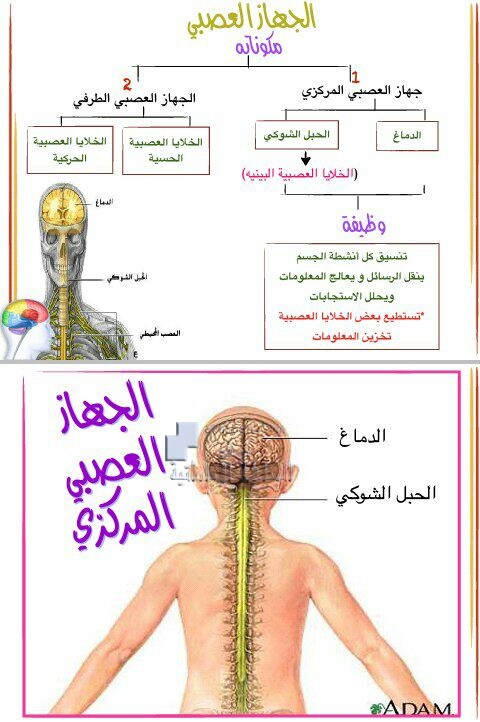
The human nervous system is divided into two major parts:
- Central Nervous System (CNS)
- Peripheral Nervous System (PNS)

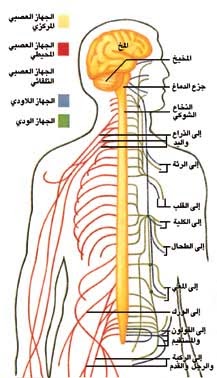
ويتألف الجهاز العصبي للإنسان من قسمين كبيرين هما: الجهاز العصبي المركزي والجهاز العصبي المحيطي/ الطرفي.
The Central Nervous System (CNS) consists of the brain and spinal cord. The brain is the main center for processing information and regulating many nervous functions, while the spinal cord transmits neural information between the brain and the rest of the body and is also involved in certain reflex responses.
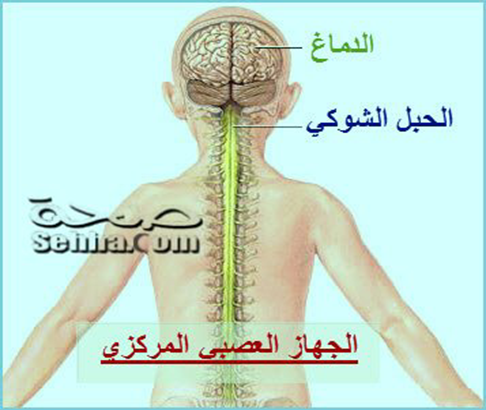
أولا: الجهاز العصبي المركزي:
يتالف الجهاز العصبي المركزي من الحبل الشوكي والدماغ الذي يعتبر امتدادا وتوسعا للحبل الشوكي.
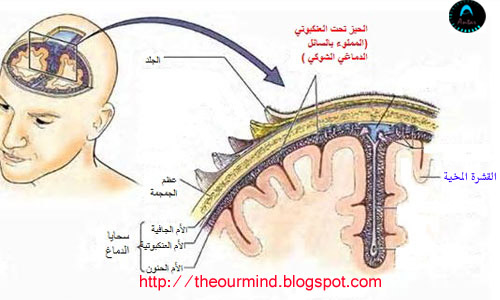
The central nervous system (CNS) is protected by bones, the meninges, and cerebrospinal fluid.
- The brain is protected inside the skull.
- The spinal cord is protected within the vertebral canal formed by the vertebrae.
- Both the brain and spinal cord are surrounded by three protective membranes called the meninges:
- Dura mater: the tough outermost layer.
- Arachnoid mater: the middle layer.
- Pia mater: the thin innermost layer that closely covers the surface of the brain and spinal cord.
Cerebrospinal fluid (CSF) is found in the subarachnoid space, between the arachnoid mater and pia mater. It helps protect the brain and spinal cord and provides a suitable environment for their functioning.
وتحمي العظام الجهاز العصبي المركزي فالدماغ محفوظ داخل الجمجمة Skull، ويحاط الحبل الشوكي بفقرات العمود الفقري Vertebral spine. كما يحاط كل من الدماغ والحبل الشوكي بثلاث طبقات من اغشية حافظة تعرف بالسحايا Meninges. (تتكون السحايا من ثلاث أغشية، تشمل ما يلي: الطبقة الخارجية هي الام الجافية dura mater وهي تتصل مباشرة بعظام الجمجمة، ثم طبقة متوسطة هي العنكبوتية/ الغشاء العنكبوتي arachnoid mater ، ثم الغشاء الداخلي الذي يكون رقيقًا في تماس مباشر مع المخ وهو الام الحنونpia mater )، ويوجد بين غشاء العنكبوتية والأم الحنون السائل النخاعي الشوكي cerebrospinal fluid.
I. The Brain (Encephalon)
The brain is divided into three major regions: the forebrain, the midbrain, and the hindbrain.
1. Forebrain
The forebrain consists of the following structures:
1.1. The Cerebrum
The cerebrum is the largest and one of the most important parts of the brain. It accounts for approximately 80% of the brain's weight. It is a three-dimensional structure enclosed within the skull, a rigid bony cavity that protects it.
In adults, the cerebrum weighs approximately 1,280–1,380 grams. Its weight varies across developmental stages and from one individual to another. Brain weight is not directly related to intelligence.
I- الدماغ Encephalon:
ينقسم الدماغ الى: الدماغ الامامي، الدماغ المتوسط، الدماغ الخلفي.
1-الدماغ الامامي Forebrain:
ويتكون مما يلي:
1-1- المخ/ المخ الأمامي Brain/ cerebrum:
يعد المخ أكبر وأهم جزء في الدماغ يبلغ وزنه حوالي 80% من وزن الدماغ، وهو عباره عن كرة ثلاثية الأبعاد، يقع داخل صندوق عظمي محكم الاغلاق يسمى الجمجمة، ويبلغ وزنه عند الشخص البالغ من 1280 غ الى 1380 غ. ووزنه يختلف نمائيا من مرحله نمو إلى أخرى، كما يختلف وزنه من شخص الى آخر. ووزن المخ ليس له علاقه بالذكاء.
The surface of the cerebrum contains raised folds called gyri (singular: gyrus) and grooves called sulci (singular: sulcus). These folds and grooves increase the surface area of the cerebral cortex.
وسطح المخ يشتمل على ارتفاعات تسمى التلافيف Gyrus وانخفاضات تدعى الأثلام Sulcus ، والتي بفضلها تزداد مساحه سطح المخ.
ويتكون المخ من نصفي كرتين مخيتين:
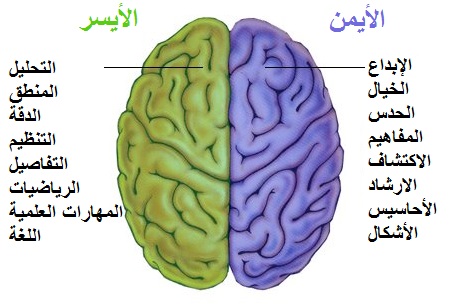
The cerebrum consists of two cerebral hemispheres. Each cerebral hemisphere contains two tissue layers that differ in their composition: an outer layer, known as gray matter, which forms the cerebral cortex, and an inner layer consisting mainly of white matter.
Gray Matter and White Matter:
Gray matter consists of neuronal cell bodies and short neuronal processes. The cerebral cortex receives various sensory signals from different parts of the body, processes and interprets them, and initiates appropriate responses.
White matter consists mainly of myelinated nerve fibers (axons) that connect different regions of the nervous system. The brain also contains clusters of gray matter within the white matter, known as gray matter nuclei. These include structures such as the thalamus, hypothalamus, and corpus striatum. Some of these structures are associated with the basal ganglia.
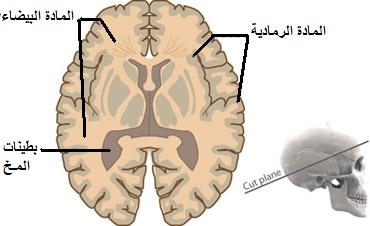
وتتكون كل نصف كرة مخية من طبقتين مختلفتين نسيجيا، الطبقة الخارجية أو المادة الرمادية gray matter أو السنجابية، أو ما يعرف بقشرة المخ cerebral cortex، والطبقة الداخلية أو المادة البيضاء white matter.
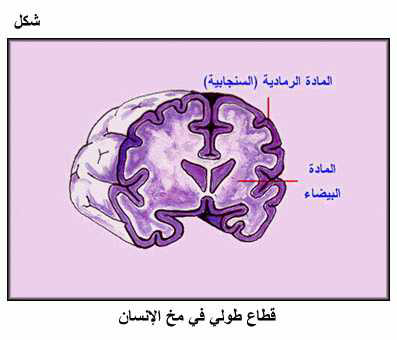
تتكون المادة الرمادية من أجسام الخلايا والألياف القصيرة للعصبونات، وتتمثل وظيفه القشرة المخية في انها تتسلم الإشارات المختلفة من جميع أنحاء الجسم، حيث تقوم بتحليلها وإصدار الاستجابة المناسبة بشأنها.
وتتكون المادة البيضاء من الألياف الطويلة الميلينية للعصبونات البينية، وهي تتكون من بلايين الالياف العصبية، وتحتوي الماده البيضاء على عدة انوية رمادية مثل: المهاد، ما تحت المهاد، الجسم المخطط.. الخ أو ما يعرف بالعقد العصبية القاعدية.
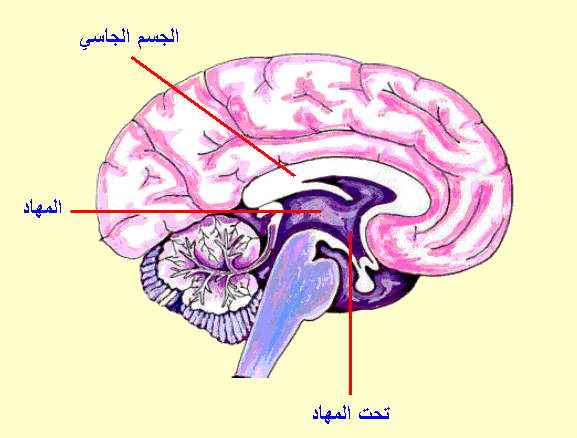
Corpus Callosum:
The corpus callosum is a band of nerve fibers approximately 10 cm long that connects the two cerebral hemispheres, serving as both a structural and functional link between them.
Damage to the corpus callosum may lead to the following effects:
· Impaired information transfer between the cerebral hemispheres: The brain may have difficulty integrating information processed by each hemisphere.
· Impaired coordination between the hands: Some tasks requiring precise cooperation between the right and left hands may become more difficult.
· Difficulties with certain cognitive tasks: These may include integrating visual and tactile information.
- الجسم الثفني/ الجسم الجاسئ Corpus callosum:
عبارة عن كتلة مستطيلة من الأعصاب يبلغ طولها حوالي 10 سم تقريبا، يقوم بربط نصفي الكرتين المخيتين، وهو همزة وصل تركيبية ووظيفية. في حالة إصابته، قد يؤدي ذلك إلى:
· ضعف انتقال المعلومات بين نصفي المخ: فقد يجد الدماغ صعوبة في دمج المعلومات التي يعالجها كل نصف كرة.
· اضطراب التنسيق بين اليدين: قد يصعب أداء بعض المهام التي تتطلب تعاونًا دقيقًا بين اليد اليمنى واليسرى.
· صعوبات في بعض المهام المعرفية: مثل دمج المعلومات البصرية واللمسية أو معالجة بعض المعلومات اللغوية، بحسب الحالة.
Cerebral Lobes and Fissures:
Each cerebral hemisphere is divided into lobes, which are separated by grooves and fissures. The cerebrum has four pairs of lobes, with each pair consisting of a right lobe and a left lobe. In general, the right cerebral hemisphere controls the left side of the body, and the left cerebral hemisphere controls the right side.
Cerebral Fissures and Sulci
The major fissures and sulci include the following:
1. Central sulcus (Rolandic fissure): Located between the frontal lobe and the parietal lobe.
2. Lateral sulcus (Sylvian fissure): Located between the frontal lobe and the temporal lobe.
3. Parieto-occipital sulcus (parieto-occipital fissure): Separates the parietal lobe from the occipital lobe.
4. Longitudinal fissure: Separates the cerebrum into the right and left cerebral hemispheres.
وتقسم كل نصف كرة مخية الى فصوص تفصلها شقوق صغيرة، حيث يبلغ عدد الفصوص في نصفي الكرتين المخيخيتين أربعة أزواج كل زوج يتكون من فصين فص أيمن وفص أيسر، ويضبط الجزء الأيمن من المخ الجانب الأيسر من الجسم والعكس صحيح.
شقوق المخ: يوجد اربعه شقوق، هي:
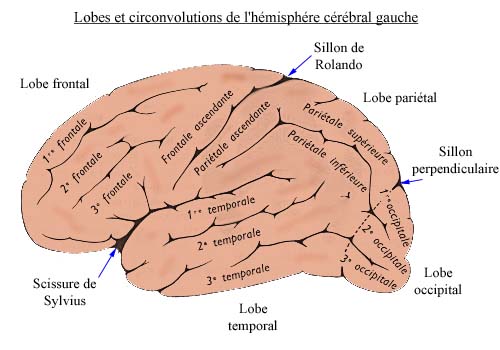
- الثلم المركزي أو ما يعرف بشق رونالدو Ronaldo fissure: ويوجد بين الفص الجبهي والفص الجداري.
- الثلم الوحشي/ الشق الجانبي أو ما يعرف بشق سيلفيوس Sylvian fissure: يوجد بين الفص الجبهي والفص الصدغي.
- الشق القائم/ الشق العمودي أو ما يعرف بالشق الجداري القذالي parieto-occipital fissure: ويوجد بين الفص الجداري والفص القذالي.
- الشق الطولي أو الأخدود الكبيرfissure longitudinal: وهو الذي يقسم المخ الى نصفي كرتين مخيتين أيمن وأيسر.
- فصوص المخ:
توجد أربعة أزواج من الفصوص، هي:
- الفصان الجبهيان/ الأماميان Frontal lobes
- الفصان الجداريان/ العلويان Parietal lobes
- الفصان الصدغيان/ الجانبيان Temporal lobes
- الفصان القفويان/ القذاليان Occipital lobes
إضافة إلى فص الجزيرة Insular Lobe
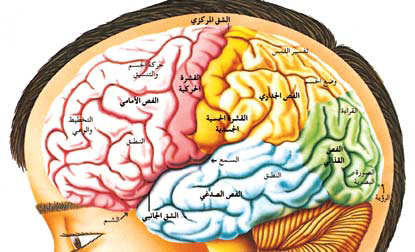
A. The Frontal Lobes
The frontal lobes are located in the anterior and superior regions of the cerebral hemispheres and occupy a substantial portion of the cerebral cortex. They play an important role in motor skills, such as writing and playing musical instruments.
These lobes are also involved in the control of voluntary movements, personality, and social behavior. They contain Broca’s area, a region associated with speech production, which is typically located in the left cerebral hemisphere in right-handed individuals.
Furthermore, the frontal lobes are responsible for directing and regulating higher-order cognitive processes toward specific goals, including logical reasoning and planning, as well as complex mental activities such as creative tasks and abstract thinking.
Damage to the frontal lobes may result in the following:
· Apathy: A reduction in motivation, emotional responsiveness, and interest in activities.
· Reduced spontaneity and initiative: Difficulty initiating actions and making appropriate decisions independently.
· Impaired social behavior: Difficulties in regulating social conduct, which may manifest as disregard for social rules, reduced self-control, inappropriate euphoria, depressive symptoms, excessive argumentativeness, or slowed thinking.
· Impaired speech production: Damage to Broca’s area may result in Broca’s aphasia (expressive aphasia), which is characterized by difficulty producing fluent speech. Language comprehension is relatively preserved in many cases, although certain aspects of comprehension may also be affected.
· Impaired working memory: Difficulty temporarily maintaining and manipulating information required for ongoing cognitive tasks, as the prefrontal cortex plays a key role in working memory.
أ- الفصان الجبهيان:
هما الفصان اللذان يقعان في القسم الأمامي والأعلى من نصفي الكرة المخية، ويحتلان في المخ ما يقارب ثلث القشرة المخية، يتحكمان في المهارات الحركية كالكتابة والعزف مثلا.
كما يقع في هذين الفصين مراكز الحركات الارادية والشخصية، والمنطقة المسؤولة عن الكلام والتي تسمى بمنطقة بروكا Broca's area ، وتقع في نصف كرة المخ الأيسر في الأشخاص الأكثر استخداما لليد اليمنى.
كما يشرف هذان الفصان على توجيه العمليات العقلية العليا نحو الأهداف وتنظيمها كالتدليل المنطقي ورسم الخطط، والعمليات العقلية المعقدة كالأنشطه الابداعية والتفكير التجريدي.
- في حاله إصابة هذه المنطقة بضرر معين، فان ذلك يؤدي الى ما يلي:
*الخمول واللامبالاة Apathy (قلة العاطفة والاهتمام).
*نقص التلقائية: حيث يفتقد المصاب القدرة على المبادرة في اتخاذ القرارات المناسبة.
*اضطراب في السلوك الاجتماعي: كالتمرد على القوانين وغياب الانضباط مثلا ابتهاج بشكل غير مناسب او اكتئاب او افراط في الجدل، التفكير البطئ..
*ووجد العلماء أن تخريب منطقة بروكا ينتج عنه عدم القدرة على الكلام. وقد يؤدي إلى الحبسة التعبيرية (Broca’s aphasia)، التي تتميز بصعوبة إنتاج الكلام بطلاقة، مع بقاء الفهم أفضل نسبيًا في كثير من الحالات، وإن كان قد يتأثر أيضًا..
صعوبة الاحتفاظ بالمعلومات المتاحة للمعالجة لوجود مركز الذاكره العاملة في الفص الجبهي.
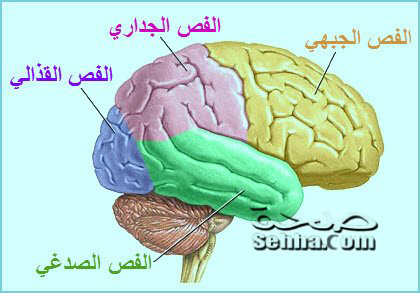
B. The Parietal Lobes:
The parietal lobes are located posterior to the frontal lobes and are primarily involved in somatosensory processing. such as touch, pain, temperature, and proprioception.
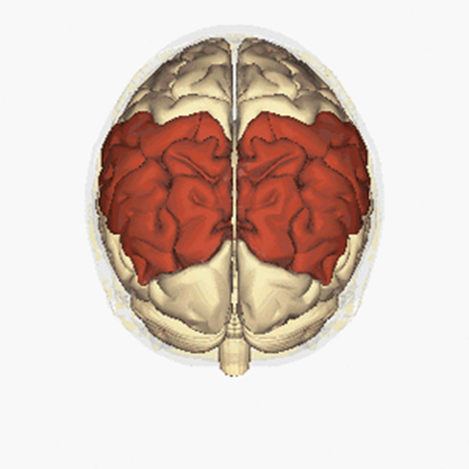
Main functions:
- Integrating sensory information to perceive the surrounding environment.
- Recognizing objects through their sensory properties, such as texture and weight.
- Contributing to spatial memory, attention, and working memory.
- Participating in numerical processing and aspects of language comprehension and reading.
Damage to the parietal lobes may cause:
- Reduced or absent sensation on the contralateral side of the body.
- Astereognosis: difficulty recognizing objects by touch.
- Impaired attention and concentration.
- Difficulties with calculation and writing.
- Disturbances in body representation.
- Apraxia: difficulty performing learned actions, such as combing one's hair or dressing.
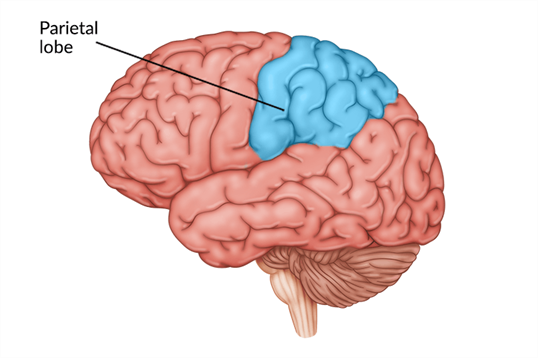
ب- الفصان الجداريان او العلويان:
ويقعان تحت الفصان الجبهيان مباشرة ويطلق عليهما منطقة الاحساسات الجسمية. حيث تقع في هذه المنطقه المخية مراكز الاحساس بالألم والحرارة واللمس والاحساس العميق من كل الجسم.
ü كما يقوم هذان الفصان باستقبال المعلومات الحسية ومعالجتها، وبالتالي إدراك الوسط المحيط بشكل جيد.
ü الجمع بين الانطباعات حول القوام والوزن وتحويلها الى تصورات عامة.
ü تخزين الذكريات المكانية كما لهما دور في العمليات العقلية المعرفية كالذاكرة قصيرة المدى.
ü يوجد فيهما المراكز العصبية الخاصة بالمهارات الرياضية، وفهم اللغة.
- في حالة تعرضهما الى ضرر معين، يظهر ما يلي:
ü ضعف الإحساس أو غيابه في الجزء المعاكس من الجسم: حيث يجد الأشخاص صعوبة في تحديد موضع الإحساس ونوعه كالألم والحرارة والبرودة.
ü اضطراب القدرة على التعرف على الأشياء الحسية عن طريق اللمس، او ما يسمى بالأقنوزيا Agnosia.
ü صعوبه القدرة على التركيز.
ü عدم القدرة على تمييز الجانب الأيمن من الأيسر وقد يهملون الجانب المعاكس من الجسم.
ü مشكلات في الحساب والكتابة.
ü اضطراب صوره الجسم.
ü الاأدائية: وهي عدم القدرة على أداء المهارات البسيطة كتمشيط الشعر او ارتداء الملابس.
كما ان هناك عدة متلازمات شائعة تنتج عن اصابات الفص الجداري، نذكر منها ما يلي:
أولا: ظاهره الاهمال المقابل: ينتج عنها ملاحظة جانب واحد من مجال الرؤية أو الجسم، والاعتناء به في مقابل اهمال الجانب الاخر.
ثانيا: متلازمة جيرستمان Gerstmann syndrome: وتنتج عن تلف الفص الجداري الايسر وغالبا ما يعاني هؤلاء الاشخاص اشخاص من صعوبات في الكتابة والحساب واللغة وعدم القدرة على إدراك الاشياء مثل عد الأصابع، عدم القدرة على التمييز بين اليمين واليسار، وعدم القدرة على وضع الأفكار على الورقة، عدم القدرة على حساب مسائل حسابية بسيطه وغير ذلك..
No content has been added to this book yet.