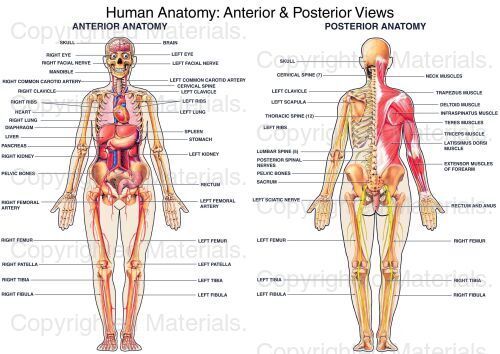
This first lecture provides an introduction to human anatomy, focusing on fundamental concepts necessary for the study of movement and physical activity. It presents the definition and objectives of anatomy, its main branches, and the standard anatomical position. The course also introduces anatomical reference planes, directional terminology, and basic movements of the human body. Finally, it offers an initial overview of osteology, arthrology, and myology, establishing essential foundations for understanding the structure and function of the musculoskeletal system.
This course introduces the osteology of the upper limb, emphasizing its structural organization and functional relevance to movement and dexterity. It examines the bones of the shoulder girdle, arm, forearm, and hand, describing their anatomical features, articulations, and biomechanical roles. Particular attention is given to the clavicle, scapula, humerus, radius, ulna, and carpal bones, as well as to the functional movements of the forearm.
This course explores the arthrology of the upper limb, focusing on the structural organization, functional mechanisms, and clinical relevance of its joints. It examines the classification of joints and provides a detailed study of the shoulder girdle, glenohumeral, elbow, radioulnar, wrist, and hand joints. Emphasis is placed on joint types, articulating surfaces, ligaments, muscular stabilization, and permitted movements.
This course presents the myology of the upper limb, focusing on the muscles responsible for movement, strength, and fine motor control of the shoulder, arm, forearm, and hand. Muscles are studied according to their anatomical regions, compartments, origins, insertions, actions, and innervation. Particular emphasis is placed on functional muscle groups, such as the rotator cuff, flexor–pronator and extensor–supinator compartments, and intrinsic hand muscles.
This course provides a detailed study of the anatomy of the lower limb, focusing on the bones that form its framework. Students will explore the structure, features, and functions of key skeletal components, including the hip bone, femur, patella, tibia, fibula, and the bones of the foot.
This course focuses on the arthrology of the lower limb, examining its joints, ligaments, and articular structures. Students will study how the pelvic, thigh, leg, ankle, and foot joints provide a balance between stability and controlled mobility to support the body’s weight and enable locomotion. Emphasis is placed on key joints such as the hip, knee, and ankle, including their articulations, ligaments, movements, and functional roles. The course also highlights how these joints work together to absorb shock, maintain balance, and allow efficient bipedal movement, illustrating the lower limb as a biomechanical system optimized for both strength and mobility.
This course explores the anatomy of the trunk, emphasizing both its skeletal (osteology) and muscular (myology) components. Students will study the vertebral column, thoracic cage, and associated muscles of the back, thorax, abdomen, and lumbar region.
This lecture provides a comprehensive overview of the cardiovascular system, focusing on the anatomical organization of the heart and blood vessels. It examines the location, orientation, wall structure, and external and internal configuration of the heart, with detailed attention to cardiac chambers, valves, coronary circulation, and intrinsic and extrinsic innervation. The lecture also explores the structural characteristics of arteries and veins, including the major vessels of the pulmonary and systemic circulations.